
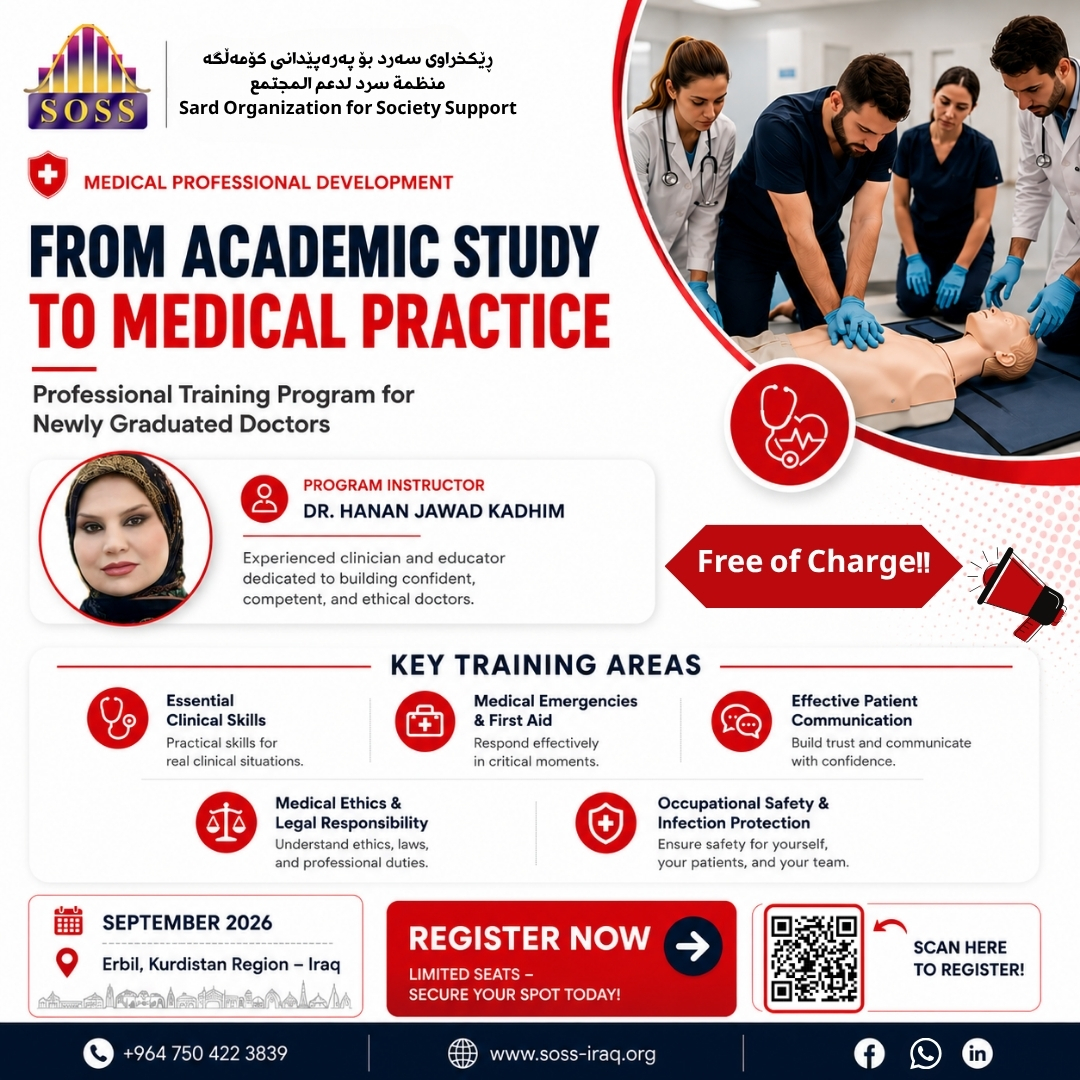
Training Program for Newly Graduated Doctors: From Academic Study to Safe and Effective Medical Practice
Introduction
Newly graduated doctors face a clear gap between the theoretical knowledge they acquired during their university years and the requirements of practical clinical work in health institutions. This gap is represented by weak applied clinical skills, communication skills, medical decision-making, and professional ethics in the real work environment.
Based on the urgent need to prepare a doctor capable of rapid and safe integration into the health system, the idea came about preparing a comprehensive training course aimed at supporting the new doctor professionally, scientifically, and psychologically.
Course type
Short-Term Professional Training Course
Course objectives
- Qualifying newly graduated doctors for safe and professional medical practice in accordance with modern ethical and scientific standards
- Enhancing the basic clinical skills of the general practitioner.
- Develop communication skills with patients, their families, and the medical team
- Training doctors to deal with basic emergency cases
- Raising awareness of medical ethics and legal responsibility
- Strengthening the skills of writing medical history and medical documentation
- Preparing the doctor psychologically and practically for the medical work environment
Target group
- Doctors recently graduated from medical schools
- Regular resident doctors
- Sixth stage students in medical colleges (Stager)
Course topics and content
- Basic clinical skills:
Take a medical history and physical examination
Writing medical notes
Read basic tests and examinations
2. Basic medical emergency
Cardiopulmonary resuscitation
Dealing with shock, bleeding, and shortness of breath
Principles of first aid
3. Effective medical communication
Communicating with patients and their families, breaking bad news, and
working within the health team
4. Medical ethics and legal responsibility
Professional ethics, patient rights, medical errors and how to deal with them
5. Principles of occupational safety
Occupational safety and protection from infection, managing the
psychological stress of the doctor, managing time and work shifts, not
hesitating in medical advice, the art of how to deal with an angry patient.
Training methods
Lectures, practical case presentations, clinical simulations, real-life case
studies, and open discussions
Course duration
Two days, each day two hours of training
Course outcomes
A more confident and competent doctor, reducing medical errors, improving the quality of health care, enhancing the professional and ethical commitment of the doctor.
Conclusion
This course represents an essential step in building a scientifically, practically and ethically qualified doctor, capable of meeting the needs of the health system and society, and is a real investment in the quality of future health care.
Course Instructor
Dr. Hanan Jawad Kadhim
Gynecology, obstetrics, infertility and in vitro fertilization specialist
Sub-Specialization in infertility and IVF
Sub-Specialization in human research
An expert in leadership preparation, project management, and crisis
management
Start Date and Place
Early September, 2026
Erbil, Kurdistan Region, Iraq